TennisCourtExperts
Tennis Court Construction in Southwest Florida
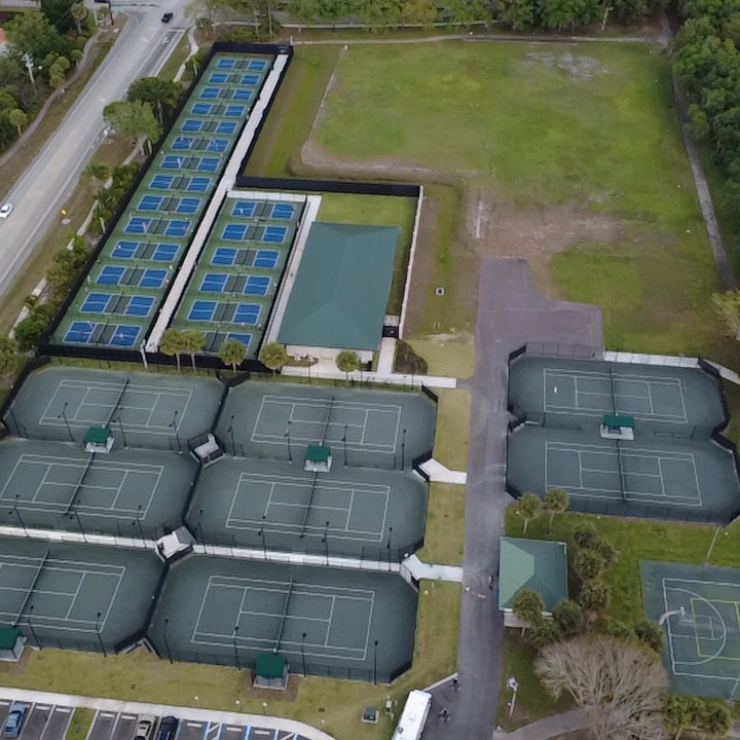
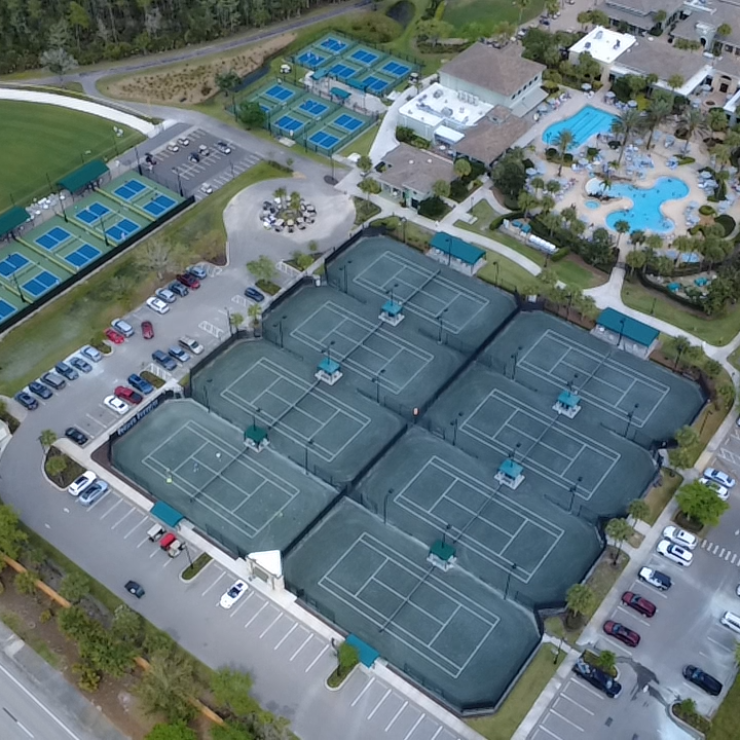
A tennis court is a long-term investment, and the work that happens before the first coat of acrylic is what determines whether it plays well a decade from now. Ritzman Courts builds tennis courts across Southwest Florida from the base up, engineering each layer for the heat, humidity, and sudden rainfall that define our climate. Whether you want a fast acrylic hard court or a traditional Har-Tru clay surface, the goal is the same: a court that drains correctly, plays consistently, and holds its finish through Florida seasons.
The Details That Define a Professionally Built Court
Surface Selection
Base & Sub-Base Engineering
A tennis court is only as good as what sits beneath the surface. Properly graded, compacted, and stabilized base layers prevent cracking, settling, and uneven play across the life of the court.
Drainage Systems
Southwest Florida courts have to shed heavy rain quickly. We design custom drainage systems that move water off the court fast, protecting both playability and the surface material underneath.
Surface Finish & Line Work
Acrylic coatings, line striping, and net post installation are the visible parts of a court, but the precision here is what makes the court feel professional. Tight tolerances on slope, lines, and finish are non-negotiable.
The Construction Standards Behind a Court That Lasts
A tennis court is a system, not a slab. Every layer interacts with the next, and weakness at any level will surface within a few seasons. Most premature court failures trace back to base preparation, drainage design, or surface application, not the materials themselves. Getting those right takes hands-on experience with how courts actually behave in the field, not just how they look on a spec sheet.
Florida adds variables most builders never deal with elsewhere. High water tables, expansive soils in certain areas, intense UV exposure, and tropical rainfall all work against a court if construction does not account for them. We engineer for those conditions from day one, which is why our courts hold up through the conditions that break lesser installations.
Ritzman Courts handles every element of court construction in-house, from base work and drainage to fencing, lighting, shade structures, and surfacing. That control matters. When one company owns the entire build, there are no gaps between trades, no finger-pointing when something needs to be corrected, and no compromises on quality where one phase hands off to another.
CompleteCourtSolutions
The Tennis Court Construction Process
Every court we build starts with a site assessment. We evaluate soil conditions, existing grading, drainage patterns, and orientation. Court orientation matters more than most homeowners realize. A properly oriented court reduces sun glare during peak playing hours, which affects how often the court actually gets used.
From there we move into excavation, base preparation, and sub-base compaction. The base is the foundation of the entire court, and shortcuts here will reveal themselves in cracks, dips, and drainage failures within a few years. We compact in lifts, verify density, and confirm grade tolerances before any surface material goes down.
Surface Options for Florida Conditions
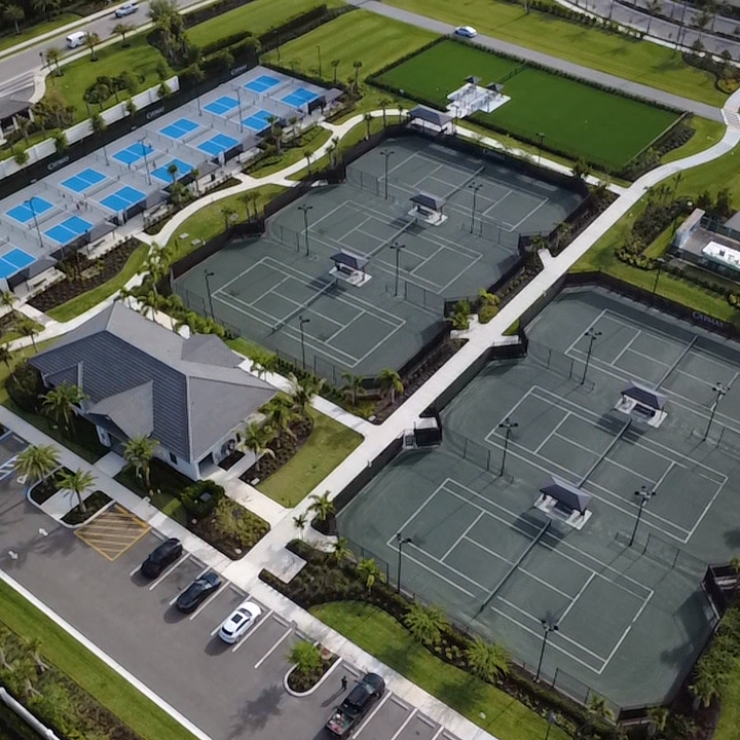
Clay courts built on the Har-Tru system play soft, are easier on the body, and stay cooler underfoot in Florida heat. They do require more ongoing maintenance, including watering, rolling, and seasonal top-dressing. Acrylic hard courts offer faster play, lower maintenance demands, and longer intervals between resurfacing. They run hotter in direct sun, which is worth factoring into court orientation and shade planning.
Hybrid approaches exist for owners who want acrylic durability with a softer feel. The right choice depends on who plays the court, how often, and what kind of game you want.
Drainage Engineering for Southwest Florida
Drainage is where most Florida courts fail. A court that holds water cannot be played, and standing water accelerates surface breakdown. We design drainage based on the specific site, including perimeter drains, sub-surface drainage layers where needed, and properly graded slopes that move water off the court without compromising play. Custom drainage construction is a core part of every project, not an add-on.
Long-Term Performance & Investment Protection
A well-built tennis court should give you fifteen to twenty years of strong performance with appropriate maintenance. The choices made during construction directly determine how long that window is. Skimping on base depth, drainage, or surface material can shave years off the court's life and create expensive repairs that could have been avoided. We build with the long view in mind, because a court that needs major rework after five years was never a good investment in the first place.
Request a Court Construction Consultation
Every property is different, and so is every tennis court project. The best way to scope your build is a direct conversation about your site, your goals, and how you want the court to play. We will walk you through surface options, drainage needs, and what a realistic timeline and investment looks like for your situation.
Tennis Court FAQ's
Most tennis court construction projects run six to twelve weeks from groundbreaking to playable surface, depending on court type, site conditions, weather, and any supporting infrastructure like fencing, lighting, or shade structures. Clay courts and acrylic courts have different cure and settling windows that affect the final timeline. We provide a detailed project schedule once the site has been assessed.
It is the single biggest factor in court longevity here. Southwest Florida rainfall is heavy and frequent during the wet season. A court without proper drainage holds water, stays unplayable longer, and breaks down faster at the surface level. We design custom drainage on every build because no two sites move water the same way.