LuxuryCourtSolutions
Custom Pickleball Court Construction Built for Year-Round Play
A pickleball court looks simple on the surface, but the construction underneath determines whether the ball bounces true, whether the surface holds up to UV exposure, and whether the court drains correctly after Florida storms. Our team builds courts to USA Pickleball-recommended dimensions and surface standards, with the base work, drainage, and acrylic systems that make a court feel professional from the first serve.
What Goes Into a Professionally Built Pickleball Court
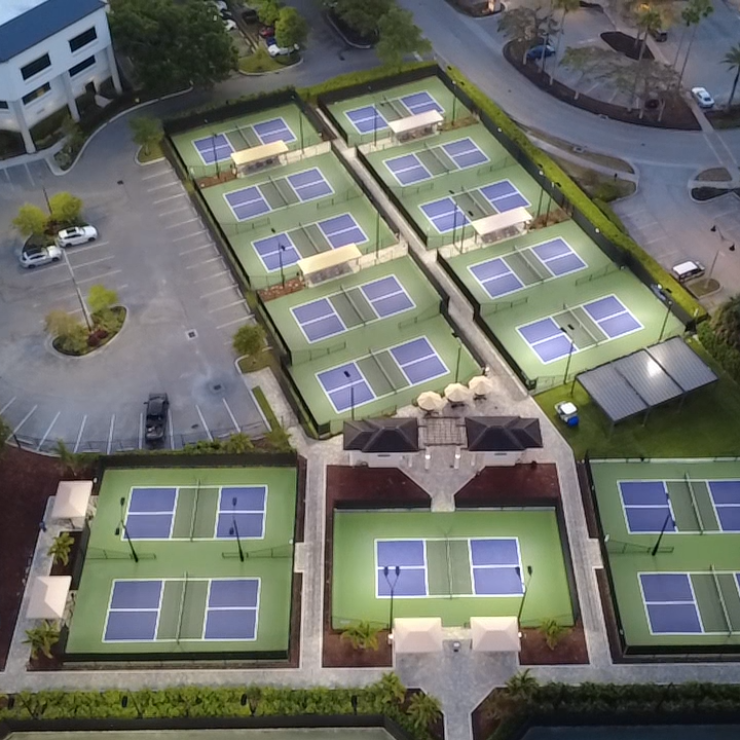
Court Design & Layout
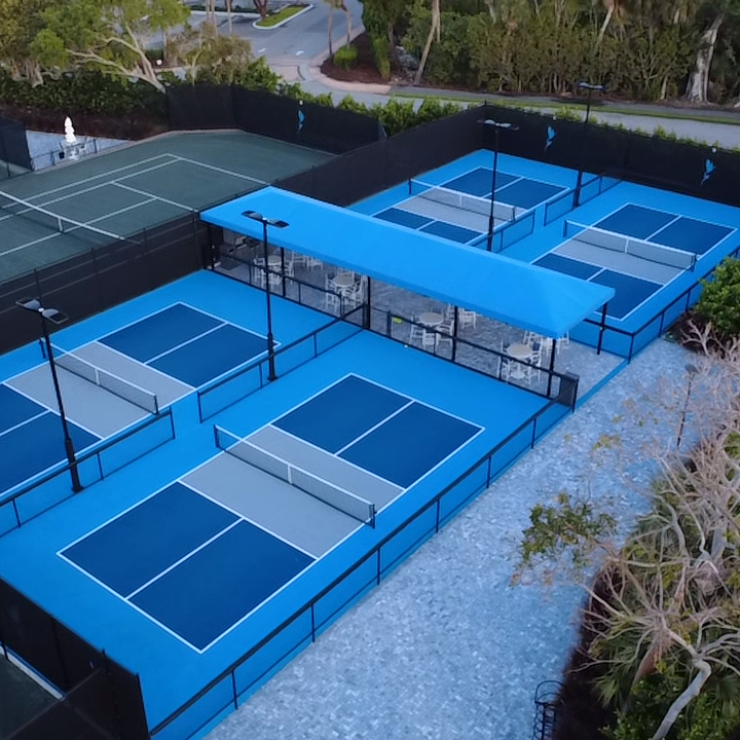
Surface & Acrylic Coatings
Drainage for Florida Rain
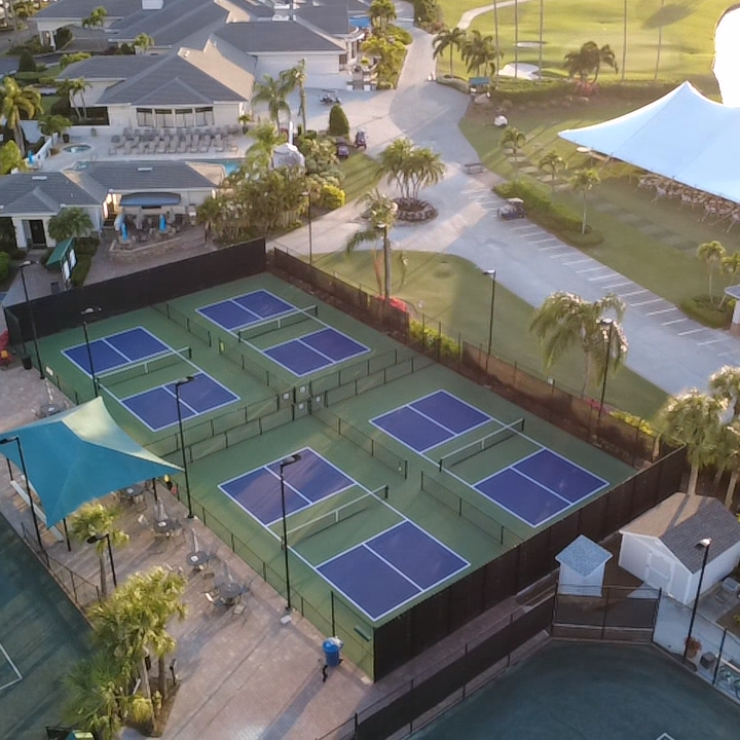
Fencing, Lighting & Accessories
The Right Way to Build a Pickleball Court
A pickleball court built like a driveway will play like a driveway. The base, sub-base, drainage, and surface materials all need to be matched to the sport and the climate. Generic concrete or asphalt work, finished with off-the-shelf paint, produces a court that cracks, fades, and floods within a few seasons. Doing it right means treating the court as a complete system from the soil up.
Southwest Florida puts every court material under stress. UV breakdown, thermal expansion, sudden heavy rainfall, and high humidity all attack courts that were not built with these conditions in mind. We use materials and methods proven to perform in this environment, including premium acrylic systems and engineered drainage designed for tropical rainfall patterns.
Ritzman Courts handles base prep, surfacing, fencing, lighting, and shade structures in-house. That means a coordinated build with no gaps between trades, no compromises where one phase hands off to another, and a single point of accountability for the entire court. It also means we can build courts as part of a larger amenity project, including paver walkways, viewing areas, and shade installations.
EliteCourts
The Pickleball Court Construction Process
Every pickleball court project starts with site evaluation. We look at grading, drainage patterns, soil conditions, and orientation. Pickleball is most often played in the morning and evening to avoid Florida heat, which influences how we orient the court relative to the sun. From there we move into excavation, base preparation, paving, and acrylic surfacing.
The base layer is where most problems start in poorly built courts. A properly compacted aggregate base with the correct depth and grading is what keeps the surface flat, prevents cracking, and gives the court its long-term structure. We compact in lifts and verify the work before paving begins.
Surface Systems & Acrylic Coatings
A pickleball court surface is a multi-layer system, not a single coat of paint. We apply a resurfacer to bond to the pavement, multiple color coatings tuned for grip and ball speed, and crisp line striping using purpose-built court paint. The acrylic system also protects the underlying pavement from UV and moisture, which is what gives the court its longevity.
Color choice is more than aesthetic. Lighter colors run cooler in Florida sun, which matters for player comfort during midday play. Darker colors give better ball visibility but absorb more heat. We help you balance that for your court's use case.
Drainage Engineering for Florida Conditions
Florida pickleball courts need to handle heavy seasonal rainfall without holding water. We grade courts with the correct slope across the playing area, install perimeter drains where needed, and design sub-surface drainage on sites with high water tables or poor natural drainage. A court that drains properly is playable within hours of a storm. A court that does not can sit unusable for days.
Lighting, Fencing, and Court Accessories
Most serious pickleball courts in Florida are lit for evening play. Proper lighting design avoids glare, illuminates the playing surface evenly, and uses fixtures rated for the corrosive coastal environment. Fencing height, mesh size, and gate placement all affect how the court plays and how easy it is to retrieve balls. We handle complete installation of lighting, fencing, windscreens, and shade structures as part of the build or as separate projects.
Plan Your Pickleball Court Project
What to know before building your pickleball court
A regulation pickleball court is 20 feet by 44 feet for the playing area, with additional run-back room recommended around the perimeter for safe play. The total footprint we usually recommend is closer to 30 by 60 feet to give players room to chase shots and reduce risk of running into fencing.
Critical. Southwest Florida rainfall is intense and frequent during the wet season. Without proper grading and drainage, courts hold water, stay closed longer, and break down at the surface faster. Drainage design is part of every court we build.
BUILD WITH RITZMANBUILD WITH RITZMAN
Schedule Your Pickleball Court Consultation
A pickleball court is a long-term amenity, and a short conversation up front saves a lot of time and money later. Reach out and we will set up a time to talk through your project properly.